1. Unconscious Living is Slowly Killing Our Souls
The Youth of Today
When I was younger I used to get quite annoyed with the phrases many adults would use to describe young people: “The youth of today, stuck on their phones, they don’t know how to interact with each other or that they are so focused on computer games, its killing their minds!”. I just wanted to say to these people, you are just old and don’t know what life is! I vowed that I would NEVER use that phrase, the youth of today… Though, recently I was chatting to a friend about education and creating spaces for people to learn about themselves and I caught myself talking about the effects that phones and technology has on our young people. I have broken my promise to myself! I am old now. But I am concerned! Not only with our youngsters but with all of us.
The Stats
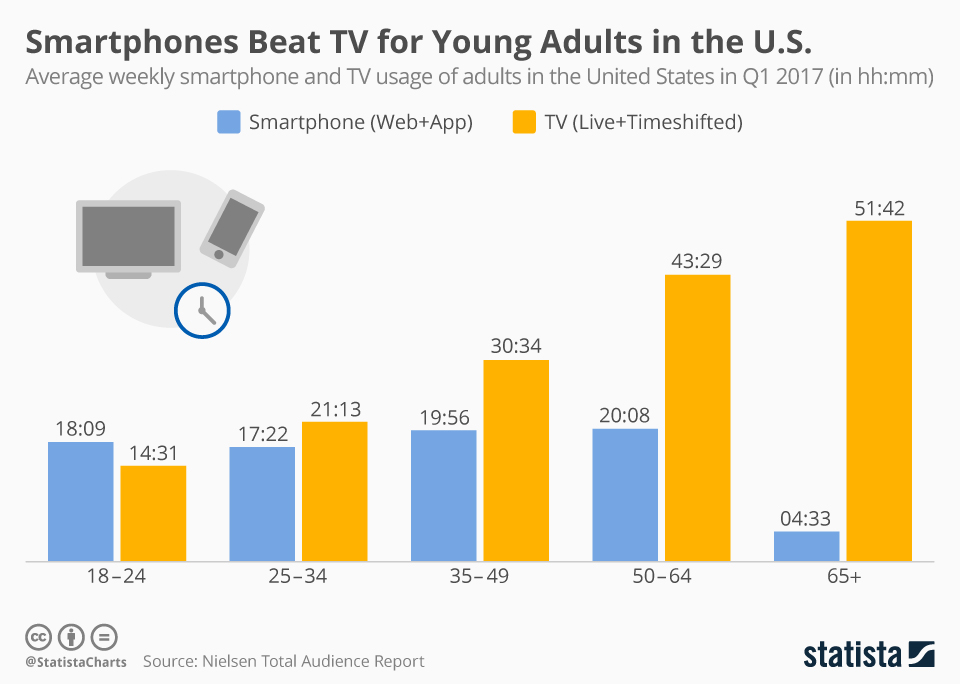
Did you know that a study on statista in 2017 in the US shows that for young adults 18-35 spend around 20 hours on their smartphones each week and around 25 hours watching TV. And people aged 65 and over spent around 4 hours on their smartphones and over 50 hours watching TV. This means that people are spending roughly two days out of 7 on a device. This is crazy. Now we may not be in America, but I would make a bet that these stats are not too different in South Africa.
The Damage of the Harmless
Is this bad? I like watching TV. And I like talking to my friends on Whatsapp. But what is this excess doing to us? Why are we doing this? It is certainly enjoyable otherwise we would not be doing it. Yet we all know that a life spent on devices is not the life in all its fullness Jesus promises us, we know there is more! Today, I want us to look at what are the activities we enter into unconsciously. When are we on autopilot during our day? These are things that if done once, have no effect to little effect what-so-ever, yet it is over time, and in excess that these periods of unconsciousness start to deaden the desires that God has placed on our hearts and pull us into unconscious living. I still remember a time in my early 20’s when I longed each day to get home to lose myself in gaming, I wanted to live more online, than in life itself.
2. The Invitation to Desire
Looking. Seeking. Finding
So I find it appropriate to reflect on this idea of unconsciousness during the season of epiphany, where we are focussing on the “seeing and revealing” of God in our lives. Our Gospel reading this week is drenched in this language of looking and seeing. John the baptist sees the spirit descend as a dove when he baptized Jesus. He says that he himself has seen and has testified.” He tells his disciples “Look, here is the Lamb of God!”. Jesus “turns and sees” those same disciples, he asks them “What are you looking for?” and then invites them to “come and see” where he’s staying. Later, Andrew tells his brother Simon that he has “found” the Messiah. The passage ends with Jesus looking at Simon before renaming him. Jesus deeply sees us and wants us to see him! Looking. Seeing. Finding. Our lectionary revolves around these actions.
God Wants Us to Operate from a Place of Passion
And it is these actions which awaken us to the hungers and the desires and the truths which God plants within each and every one of us. God wants us to operate within life filled with passion. Not to be on autopilot for large periods of our lives. We are encoded with divine desires that when lived out fulfil us deeply and in our hearts we can sense that this thing that I am doing, this is what I was made for. To care for those who are hurt, to become a teacher, to create music or to become a mother. Author John Eldridge writes that “desire is the map we have been given to find the only life worth living.” We will find life and life in abundance when we lean in to the Godly desires God has given us. Looking. Seeing. Finding. These are the things we are called to do, not once, or twice but over and over again as Christians. This is the heart of discipleship – not to try and reach the final destination, but to partake in the journey more deeply and intentionally. To discover new parts of our map we have been given.
[Put the reading back on the screen]
What Are You Looking For? Jesus Grants Us an invitation.
If we have another look at this mornings reading, we will see something which I wasn’t ever aware of until this week. The very first words that Jesus speaks in the gospel of John are: “What are you looking for?”. An invitation. He invites them to look inward into themselves and discern what it is that God has placed in their heart. And the disciples seem to dodge the question entirely. Maybe they didn’t know what to say but they reply with another question. To which Jesus responds “come and see”. Jesus is never forceful in wanting us to experience life and life in abundance, but is always inviting us to move closer towards him.
If we were asked that same question now, how would we respond? What are you looking for? In your heart, in your secret and quiet places, what are the hungers that drive you forward in your life of faith? As we begin this year, what are you hoping for, asking for, looking for, in your spiritual life? What are you hoping for, asking for, looking for in you work life? personal life? Pondering these questions throughout our lives helps us to discover the map of desire that we have been gifted with.
3. Making Space for Eternity
Making Space
But answering these questions is not always easy. What I have noticed in previous years is that my ability to answer these questions lies almost solely on whether or not I have been suppressing my desires with quick fixes, sugar and junk food. The more unconscious I have been, the harder it is to feel the hungers that are placed on my heart. We need to make space in our day for looking, seeing and finding. We need to ask ourselves what activities in our day are bringing us into unconsciousness? Is it TV and smartphones or is it over eating, over working, spending too much time with emails, compulsive spending, spending time trying to get things overly perfect. So how do spend less time in these negative habits and more time living in the abundant life Christ invites us into?
Our Habits - Recap
Over the past few weeks we have been journeying through a very practical book written by James Clear called “Atomic habits”. And the idea behind atomic habits is that we are the sum of our habits. And he explains that through tiny changes we can achieve large results. Throughout the book he breaks down the science behind habits, how and why they are formed and how we can change and improve our habits. If you were away, last week we looked at how to build up new good habits that allow us to move closer to living our true life. Mike walked us through the four-step process suggested by James Clear of starting a new habit 1. make it obvious, 2. make it attractive, 3. make it easy and 4. make it satisfying. So as an example, if we wanted to become a person who exercises daily, to make it obvious, I would put my running shoes next to my bed and I would set a specific time in the morning that I am going to run. To make it attractive, I would pair it with something that I love doing such as listening to music or to a podcast. To make it easy I can make it a 5 minute or less run and to make it satisfying I can track my runs or track how many days in a row I can achieve.
Breaking Bad Habits
Today we are going to look at how to break a bad habit, James clear uses these same four steps but inverted. To break an old habit, you must 1. Make it invisible, 2. Make it unattractive, 3. Make is difficult and 4. Make it unsatisfying. This has been fairly ground breaking for me as removes the triggers and rewards of the habits themselves and does not leave this kind of change to willpower alone.
So let us say that we want to spend less time on our phone. It could be in general, or just on a specific app that we know we have an inclination towards. One thing I find very interesting is the conditioned response we have to our phones, even if I am talking to someone and their phone pings on the table, an automatic response kicks in and we pick it up to check why it is calling us.
Step 1 make it invisible.
We might then put the phone on silent mode, without vibrations and then put it in our bag instead of our pockets or our hand. You will be surprised at how little you want to go on your phone if it is not constantly vibrating or pinging.
Step 2 make it unattractive.
This is mental step where we reframe our mindsets towards these habits. So for our phone, we might think that we constantly need our phone because what happens if there is an emergency? Well, in the last year, how many emergencies were you whatsapped with that needed immediate attention? Reframing your mindset away from this habit being a necessity makes it easier to break.
Step 3 make it difficult.
This is the most useful step. If we make it slightly harder for us to perform a habit, sometimes the habit can disappear almost instantly. So for our phone, we could make a really long unlock password with weird characters. Or we could make it that every time we want to check facebook, we have to log in. Or we could always leave our phone upstairs in the office.
Step 4 make it unsatisfying.
There are apps that we can get that monitor our phone usage and how much time we spend on certain apps. I was horrified when I discovered I unlocked my phone over 100 times in a day and spent over 4 hours using my phone!
Step 3 has been by far the most useful of the steps. Creating a bit more friction to get to your bad habits does wonders. Put snacks on the top shelf at the back in the kitchen, unplug the TV every time you finish watching it. Move the TV out of the bedroom. Just adding this tiny distance, over the long term, makes significant changes.
With these tools under our belt we will be able to create more space in our day. More conscious space where we can sense our divine desires. But a cautionary tale from a reformed bad-habit crushing addict, these tools do not build our relationship with Christ, all they do is help give us space. Christ has already seen us and loves us for who we are. Space just allows us to look back.